JOURNAL
Welcome to Rivium Journal: What This Is, Who It's For, and What You Can Expect
What Rivium Journal publishes, how we assess evidence, and the standards readers can hold us to.
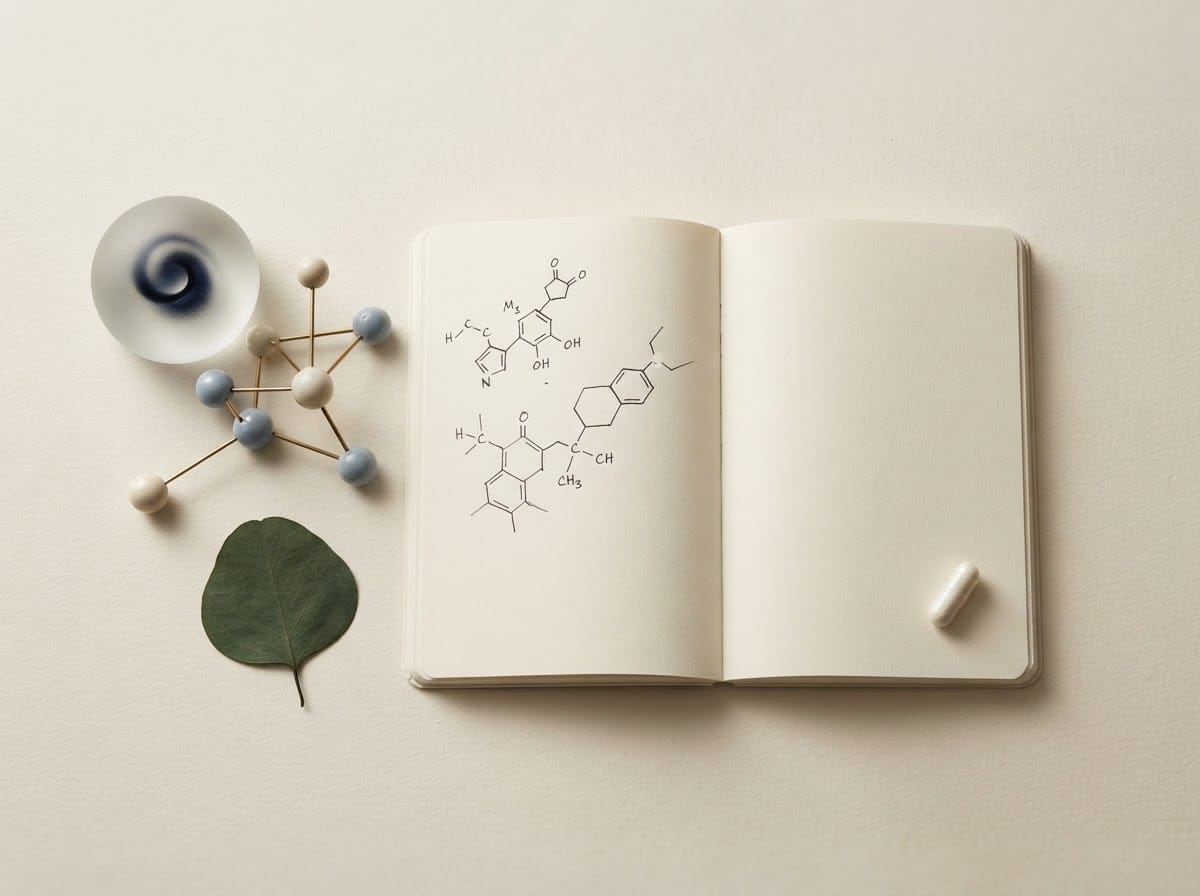
If you've ever searched "does shilajit actually work" and closed twelve tabs more confused than when you started, this publication was built for you. Rivium Journal is a place where doctors and researchers-at-heart break down what actually helps with energy, sleep, and healthy aging — and what doesn't. This first article is our contract with you: what we are, how we work, and what you can hold us to.
Key takeaways
- Rivium Journal covers energy, sleep, longevity, and supplements — with every factual claim tied to primary research, not marketing pages.
- We report effect sizes and data quality, not just "it works": expect phrases like "a 12% improvement in 68 participants over 8 weeks" and "so far, only in mice."
- The journal is published by Rivium, a US supplement brand. We disclose that connection openly, and articles are never sales pitches.
- No disease claims, no miracle language — if the evidence is weak, we say so.
- One article answers one question, and every article is reviewed by a medical expert before it goes live.
Why another health publication?
Because the supplement internet is broken in a specific way. On one side: brand blogs where every ingredient is a breakthrough and every study is "promising." On the other: dense research databases that answer your question in a language you need a degree to parse.
In between sits the actual person — smart, a little skeptical, burned at least once by a product that promised transformation and delivered a charge on their card. That person deserves a source that respects both the science and their intelligence.
That's the gap Rivium Journal exists to fill: honest, readable breakdowns of what the research says, written for adults.
What we publish
Every article here answers one clear reader question. That's the whole editorial formula. In practice, you'll see a few recurring formats:
- Explainers
- What is this ingredient and how does it work?
- Guides
- Help me understand the whole topic — sleep, energy, gut health — and what to do about it.
- Research highlights
- A new study is making headlines. Does it matter for me?
- Expert Q&A
- What does a doctor actually think about this?
- Glossary entries
- What does this ingredient do — and what does it not do?
That last column matters. The "what it does NOT do" part is where most health content goes quiet, and it's exactly where we plan to be loudest.
How we handle evidence
A few working rules, so you know what's behind every paragraph you read here:
- Hierarchy of sources. Meta-analyses and systematic reviews first, then randomized controlled trials in humans. Blogs and commercial sites are not sources — ever.
- Humans over mice. If a finding only exists in animal or test-tube studies, we tell you that in plain words instead of hiding it behind "studies show."
- Effect sizes, not vibes. "Improves sleep" is marketing. "Fell asleep about 17 minutes faster in a trial of 46 adults" is information. We aim for the second kind.
- Contradictions included. When studies disagree, we walk you through the disagreement instead of cherry-picking the flattering one.
- Medical review. Every article is checked by a medical expert before publication, with the reviewer's name and date on the page.
The Rivium connection, in plain terms
Full disclosure, because you'd find out anyway and because it's the law we happily follow: Rivium Journal is published by Rivium, a US supplement brand built on printing full doses on the label and skipping proprietary blends.
Here's how we keep that relationship honest:
- Articles are education, not advertising. You won't find product pitches woven into the text.
- When a topic touches an ingredient we sell, we say so explicitly.
- The evidence gets reported the same way whether it flatters a product or not. If the data on an ingredient is weak, that's what we'll write — including ingredients in our own catalog.
We're betting the whole publication on a simple idea: trust earned slowly is worth more than attention bought loudly.
What we will never do
- Claim a supplement can cure, treat, or prevent a disease. None can, and anyone telling you otherwise is selling something.
- Use "miracle," "breakthrough," or "doctors hate this."
- Give you individual medical advice. We do general education; your health decisions belong with you and your clinician.
- Publish a claim we can't trace to a primary source.
Where to start
Read whatever question brought you here — and if an article doesn't answer it clearly, that's our failure, not yours.
If you'd rather not check back manually, the newsletter is the one thing we'll ask you to sign up for: new articles and research breakdowns, no daily noise, unsubscribe anytime.
Welcome. We're glad you read this far — around here, that's the metric we care about most.