JOURNAL
Sea Moss: Useful Mineral Source or Wellness Hype?
Sea moss became a billion-dollar wellness trend on the strength of a single word: "superfood." It's a real seaweed with real nutrients — but it's also marketed with claims that far outrun the evidence, and it carries two safety issues worth taking…
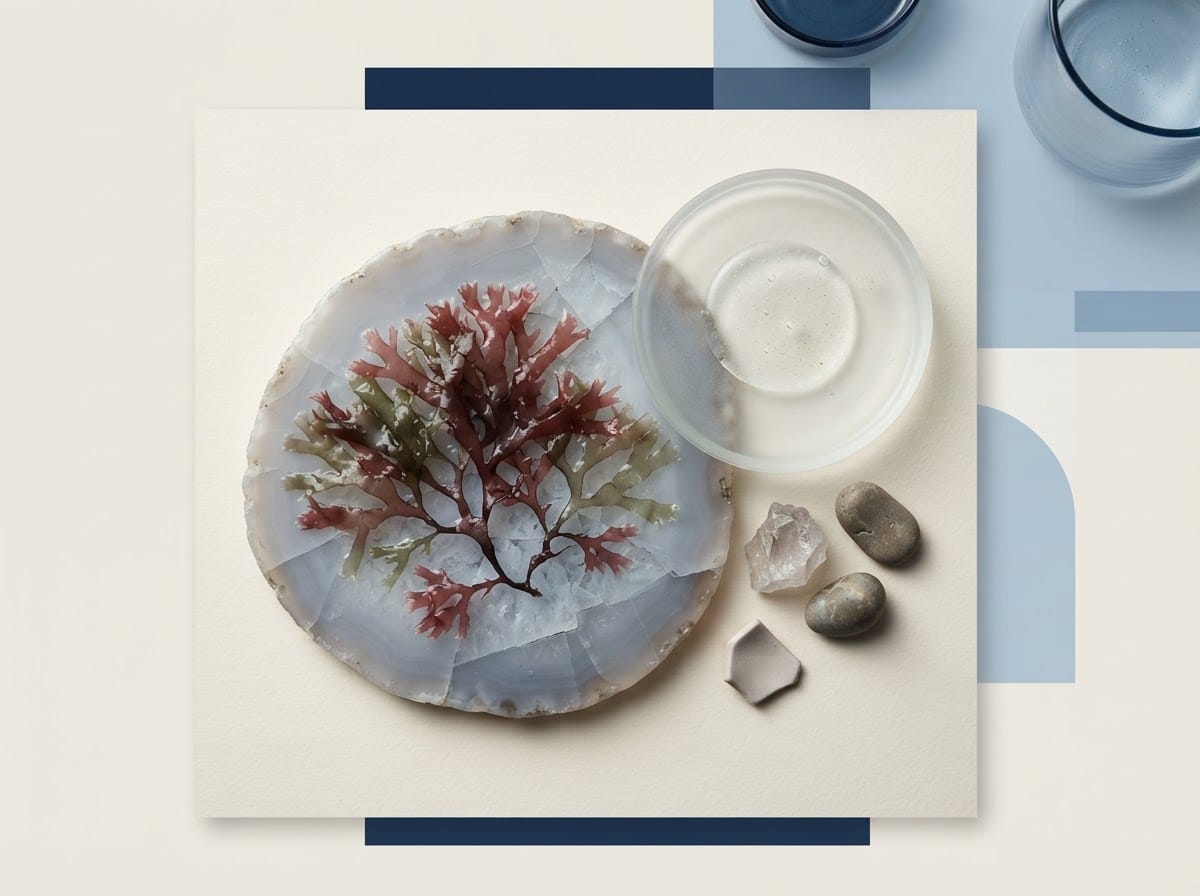
Sea moss became a billion-dollar wellness trend on the strength of a single word: "superfood." It's a real seaweed with real nutrients — but it's also marketed with claims that far outrun the evidence, and it carries two safety issues worth taking seriously. Here's the grounded version.
Key takeaways
- Sea moss (Chondrus crispus, or Irish moss) is a red seaweed and a genuine source of minerals — notably iodine — plus fiber and trace nutrients.
- The big claims ("detox," immune-boosting, thyroid-fixing, weight loss) rest on weak or preliminary evidence — mostly lab, animal, or tiny studies, not solid human trials.
- Its iodine content is high and wildly variable, and too much iodine can disrupt the thyroid — the opposite of the "thyroid support" it's sold for.
- Sea moss can accumulate heavy metals (arsenic, lead, mercury) from the water it grows in, so sourcing and testing matter a lot.
- Health authorities note there isn't enough reliable evidence to confirm sea moss supplements are safe or effective for their marketed uses.
What it actually is
Sea moss is a red seaweed harvested along the Atlantic coasts of Europe and North America. It's the traditional source of carrageenan, the jelly-like thickener you'll recognize from ice cream and plant milks. As a food, it genuinely contains a range of nutrients: iodine, some calcium, magnesium, potassium, fiber, and small amounts of vitamins.
That nutritional profile is the honest core of its appeal. For someone lacking certain minerals, seaweed can be a reasonable dietary source. The trouble starts when "contains nutrients" gets inflated into "cures what ails you."
The claims vs. the evidence
Sea moss is marketed for thyroid support, gut health, immunity, "detox," skin, and weight loss. Here's where each actually stands:
- Gut health. There's a plausible prebiotic angle — its fibers (carrageenan, and related polysaccharides) can be fermented by gut bacteria in lab simulations. But this is mostly in-vitro work, not demonstrated human benefit.
- Immunity and "antimicrobial" effects. Based largely on very early lab and animal studies (including work in worms and petri dishes). Interesting; nowhere near proof for people.
- Thyroid. This one's double-edged — see below. Iodine matters for the thyroid, but more is not better.
- "Detox." There's no credible evidence sea moss "detoxes" the body; your liver and kidneys already do that job. (We dig into the detox myth in a separate piece.)
- Weight loss. Minimal human evidence; the fiber may promote fullness, but that's a modest, general effect of fiber, not a special power.
The US Department of Defense's supplement-safety resource (OPSS) puts it plainly: there isn't enough reliable evidence to confirm whether sea moss supplements are safe or effective for these uses.
The two safety issues that actually matter
1. Iodine — the double-edged sword
Sea moss can be very high in iodine, and the amount varies enormously by species, harvest location, and preparation. That's a problem because iodine has a narrow useful window:
- The adult recommended intake is about 150 mcg/day; the tolerable upper limit is around 1,100 mcg/day.
- Risk assessments of red seaweeds found that modest daily amounts of Irish moss can push you past that upper limit.
- Too much iodine can trigger thyroid dysfunction — both under- and over-active thyroid. There are documented case reports of sea moss worsening thyroid disease. So the ingredient sold for your thyroid can, in excess, harm it.
2. Heavy metals
Seaweed absorbs what's in its water — including arsenic, lead, and mercury if it grows near pollution. Levels are often low, but contamination is a real and documented concern, which makes third-party testing and known sourcing especially important for sea moss.
The bottom line
Sea moss is a legitimate nutrient-containing seaweed — not a magic superfood. Most of its headline claims rest on thin, preliminary evidence, while its two genuine issues, highly variable iodine and heavy-metal accumulation, are exactly the parts the hype skips. If you're drawn to it, treat it as a food-grade source of some minerals, mind your total iodine, insist on tested products, and be especially cautious if your thyroid is involved.
Sources
- Operation Supplement Safety (US DoD). Sea moss in dietary supplements.
- Paz S, et al. Risk assessment of iodine intake from the consumption of red seaweeds (Palmaria palmata and Chondrus crispus). 2020.
- Northwestern Medicine. Health benefits and risks of sea moss: what you should know.
- “Fueling the fire” — Irish sea-moss resulting in Jod-Basedow phenomenon in a patient with Graves’ disease. Case report.
- An overview of the health benefits of seaweed consumption. Marine Drugs, 2021.