JOURNAL
Green Tea Extract: Benefits, Dose and Safety
Green tea is one of the most-studied drinks on earth, and green tea extract rides that reputation onto supplement shelves. But a concentrated capsule is not a cup of tea — and the difference matters for both what it does and, more importantly, what it can…
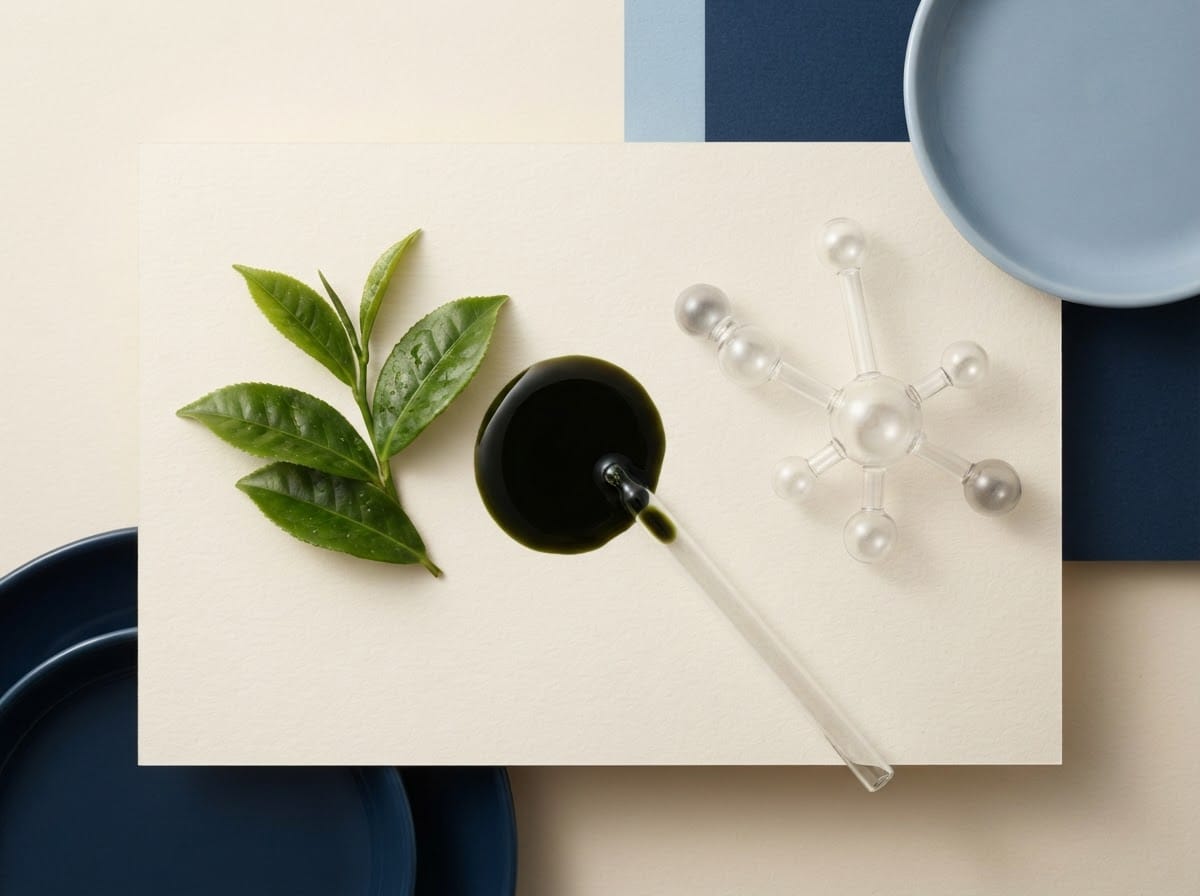
Green tea is one of the most-studied drinks on earth, and green tea extract rides that reputation onto supplement shelves. But a concentrated capsule is not a cup of tea — and the difference matters for both what it does and, more importantly, what it can do to your liver. Here's the balanced picture.
Key takeaways
- The active compounds are catechins, especially EGCG. A concentrated extract can deliver far more EGCG than brewed tea.
- For weight and metabolism, the honest read is a small, inconsistent effect — not a fat-burner. Some trials show modest changes; many show little.
- The real headline is safety: concentrated green tea extract has been linked to liver injury, and the risk rises above roughly 800 mg EGCG/day.
- Taking it on an empty stomach increases absorption — and risk. Extract is safer taken with food.
- Brewed green tea is generally safe; the concern is specifically the high-dose concentrated extract.
What's actually in it
Green tea comes from Camellia sinensis, and its bioactive stars are catechins — a family of polyphenols. The most abundant and most studied is epigallocatechin gallate (EGCG). When people talk about green tea's antioxidant or metabolic effects, they're mostly talking about EGCG.
The catch: EGCG has low oral bioavailability (often cited around 0.1–0.3%), and catechin content varies widely between products depending on how the extract is made. So "green tea extract" is not one standardized thing — two bottles can differ dramatically in EGCG.
What the evidence supports (and doesn't)
Weight and metabolism
This is the top selling point, so let's be precise. Some meta-analyses of green tea/green tea extract report statistically significant but small reductions in body weight and waist measures; others find no meaningful effect, and results vary a lot by population and study design. A Cochrane review of overweight/obese adults found effects that were small and inconsistent.
There's a plausible mechanism — catechins plus caffeine may modestly nudge fat oxidation and resting energy expenditure — but "modest nudge, inconsistent across studies" is a very different claim from "fat-burner." If you see the latter, the science doesn't back it.
Antioxidant and other claims
Green tea catechins are genuine antioxidants in the lab, and green tea drinking is associated with various health outcomes in population studies. But much of the cell-and-test-tube activity doesn't cleanly translate to measurable clinical benefit from a supplement, partly because so little EGCG actually gets absorbed.
The safety issue you need to know
This is the part the marketing rarely leads with, and it's the most important.
Concentrated green tea extract has been associated with clinically significant liver injury — ranging from elevated liver enzymes to, rarely, acute liver failure requiring transplant. This is well documented in the medical literature and by drug-safety databases.
What the reviews found:
- The European Food Safety Authority (EFSA) concluded that EGCG doses of 800 mg/day or more from supplements are associated with signs of liver stress (elevated transaminases), and could not identify a clearly safe dose from extracts.
- A US Pharmacopeia (USP) review found the injury pattern is hepatocellular, and that taking extract while fasting significantly increases catechin absorption — raising risk.
- Most cases involved daily use for two weeks or longer, and a specific gene variant (HLA-B*35:01) appears to raise individual susceptibility.
The reassuring flip side: below ~800 mg EGCG/day, taken with food, the reviews did not find evidence of liver injury over periods up to a year for most people — and brewed tea rarely causes problems.
The bottom line
Green tea extract is a legitimate source of catechins with, at best, a small and inconsistent effect on weight and metabolism — nowhere near the "fat-burner" billing. Its more important story is safety: as a concentrated extract it carries a real, dose-related risk of liver injury that brewed tea does not. If you use it, keep the EGCG dose modest, take it with food, choose a tested product that discloses its EGCG, and know the warning signs. Respected, not feared — and definitely not mega-dosed.
Sources
- EFSA. Scientific opinion on the safety of green tea catechins. EFSA Journal, 2018.
- Oketch-Rabah HA, et al. US Pharmacopeia (USP) comprehensive review of the hepatotoxicity of green tea extracts. Toxicology Reports, 2020.
- Hu J, et al. The safety of green tea and green tea extract consumption in adults — a systematic review. Regulatory Toxicology and Pharmacology, 2018.
- NIH LiverTox. Green tea. 2020.
- Jurgens TM, et al. Green tea for weight loss and weight maintenance in overweight or obese adults. Cochrane Database of Systematic Reviews.